


December 7, 2025
/
Bounce Rate: Meaning, Measurement, and How to Reduce It for Your Website
Have you ever spent hours creating a beautiful website, only to see visitors leave almost as quickly as they arrive? Are you wondering why some pages attract clicks but fail to convert visitors into customers or subscribers?
The answer often lies in a simple—but powerful—metric called bounce rate. Understanding bounce rate is not just about numbers; it’s about understanding your audience, improving user experience, and driving real business results.
In this guide, we’ll explain what bounce rate is, why it matters, and how you can reduce it to improve engagement, boost SEO, and increase conversions. We’ll also share insights from AQ Agency’s experience helping small businesses and educators in the MENA region optimize their websites for real results.
What is Bounce Rate?
Have you ever wondered why visitors leave your website after viewing just one page? Or why some pages attract clicks but fail to convert? The answer often lies in a key website metric called bounce rate.Bounce Rate Meaning: Explained Simply
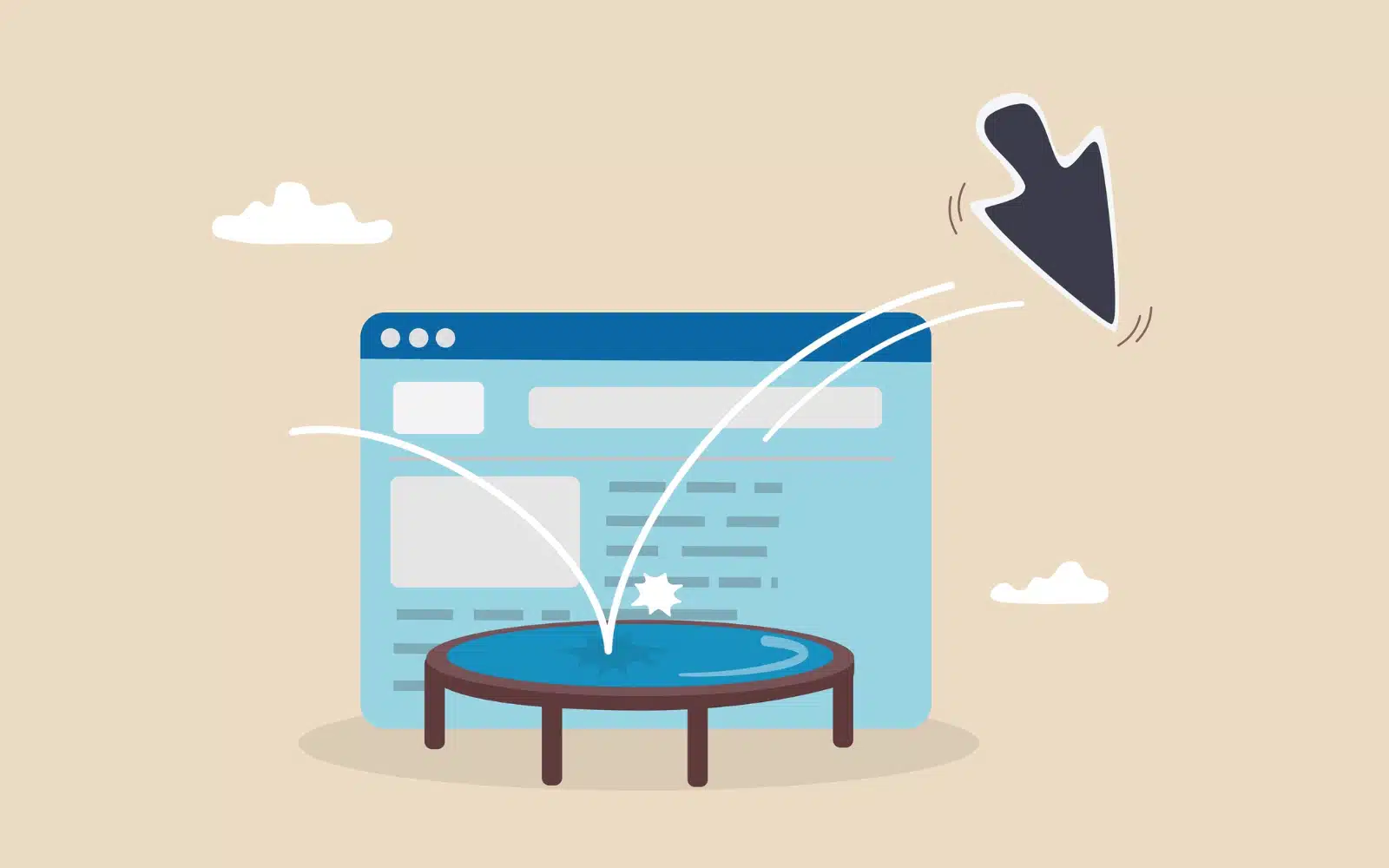
In simple terms, bounce rate is the percentage of visitors who land on a page of your website and leave without taking any further action—like clicking another page, filling out a form, or making a purchase. Imagine a customer entering a store, glancing around, and leaving immediately. That’s essentially a “bounce” on your website. For example, if 100 people visit a page and 60 leave without engaging further, the bounce rate is 60%. Relevant structured snippets ensure the right audience clicks, lowering your bounce rate.Why Bounce Rate Matters?
You might ask: “Why should I care if someone leaves my site?” Here’s why bounce rate is important for small businesses and educators:- User Experience: A high bounce rate often indicates visitors aren’t finding what they expected. Optimizing content and navigation keeps users engaged.
- SEO Performance: Search engines like Google consider engagement metrics when ranking pages. Pages with high bounce rates may rank lower.
- Conversions & Revenue: Every bounce is a missed opportunity for sign-ups, purchases, or inquiries. Reducing bounce rate can directly impact your bottom line.
Bounce Rate in Google Analytics
Do you know how your website visitors behave once they land on your pages? Understanding bounce rate in Google Analytics (GA) can provide the insights you need to improve engagement and conversions.How Google Analytics Measures Bounce Rate
In Google Analytics, bounce rate is calculated as the percentage of single-page sessions where a visitor lands on a page and leaves without interacting further. For example, if 100 people visit your homepage and 60 leave without clicking anything else, GA records a 60% bounce rate for that page. This metric helps you see which pages may not be engaging visitors effectively or meeting their expectations. Keep users engaged longer with authentic content that answers their needs.Single-Page Visits vs. Bounced Sessions
It’s important to understand the difference:- Single-Page Visit: A session where the user only viewed one page.
- Bounced Session: A single-page visit with no further interaction (no clicks, form submissions, or events triggered).
How to Check Bounce Rate in Google Analytics
Checking your bounce rate in GA is straightforward:- Log in to Google Analytics.
- Navigate to Behavior → Site Content → All Pages.
- Review the Bounce Rate column to see percentages for each page.
- For more insights, use segments to filter by device, location, or traffic source.
Average Bounce Rate Benchmarks
Are you wondering whether your website’s bounce rate is “good” or “bad”? The answer depends on your industry, website type, and audience. Understanding benchmarks helps you make sense of your data and set realistic improvement goals.Typical Bounce Rates by Industry
Bounce rates can vary widely depending on the type of website:- E-commerce websites: 20% – 45%
- Educational websites: 35% – 55%
- Blogs or content-heavy sites: 60% – 80%
- Service-based websites: 30% – 50%
What is a Good Bounce Rate?
While it varies by industry, here are some general guidelines:- Excellent: 26% – 40%
- Average: 41% – 55%
- Needs Improvement: 56% – 70%
- High: 70%+
Common Causes of High Bounce Rate
- Slow page load speed.
- Poor mobile optimization.
- Irrelevant content or misleading titles.
- Weak call-to-action or confusing navigation.
How to Reduce Bounce Rate
Are you noticing that visitors leave your website too quickly? A high bounce rate doesn’t have to be permanent. By understanding the key factors that drive engagement and applying targeted strategies, you can keep visitors on your site longer, improve conversions, and boost SEO. Here’s a detailed guide to reducing bounce rate with practical tips for small business owners and educators.Improve Page Load Speed
Slow-loading pages are one of the most common reasons visitors leave immediately. Research shows that even a one-second delay in page load can significantly increase bounce rates. Optimizing your website’s speed ensures that users can access content quickly and have a smooth browsing experience. Technical fixes include compressing images, minifying CSS and JavaScript, leveraging browser caching, and choosing a fast hosting provider. For example, AQ Agency helped a small educational platform reduce page load time from 6 seconds to 2.5 seconds, which lowered their bounce rate by almost 25%.Optimize for Mobile Devices
With the majority of users browsing on smartphones and tablets, a site that isn’t mobile-friendly can frustrate visitors and drive them away. Mobile optimization includes responsive design, easy-to-read fonts, touch-friendly buttons, and streamlined navigation. AQ Agency worked with a MENA-based small business whose mobile bounce rate was nearly double the desktop rate. After implementing a mobile-optimized layout and simplifying page elements, the mobile bounce rate decreased dramatically, resulting in higher engagement and more inquiries from mobile users.Improve Content Relevance and Readability
Visitors bounce when they don’t find content that matches their intent or when it’s difficult to read. Ensuring content is relevant, easy to scan, and well-structured keeps readers engaged. Use headings, bullet points, and visuals to make content digestible. Additionally, creating content tailored to your audience—whether small business owners or educators—builds trust and encourages further interaction. AQ Agency helped a client rewrite course pages with clear, concise language and visually engaging elements, reducing the bounce rate by nearly 30% while increasing time-on-page. The most powerful way to fix engagement is a robust internal linking strategy.Clear Navigation and CTAs
Confusing navigation or unclear calls-to-action (CTAs) can frustrate visitors, causing them to leave before exploring other pages. Ensure menus are intuitive, CTAs are visually prominent, and users always know the next step. For example, AQ Agency redesigned the navigation for a small e-learning platform, added strategic CTAs on high-traffic pages, and guided users toward course sign-ups. The result was a measurable decrease in bounce rate and a notable increase in conversions.Use Internal Linking and Engagement Strategies
Internal links guide visitors to related content, keeping them engaged longer and reducing bounces. Additionally, interactive elements like quizzes, videos, or discussion sections can encourage deeper interaction. AQ Agency implemented an internal linking strategy for a small educational blog, linking articles by topic and adding video tutorials to key pages. Visitors explored more pages per session, resulting in a lower bounce rate and improved engagement metrics.AQ Agency Approach to Improving Bounce Rate
At AQ Agency, we understand that each website is unique, and reducing bounce rate requires a tailored approach. Here’s how we help small businesses and educators improve engagement and conversions: We begin by performing a comprehensive audit of your website, identifying pages with high bounce rates and analyzing the reasons behind them. This includes evaluating page speed, mobile responsiveness, content relevance, and user experience. By pinpointing problem areas, we create a strategic roadmap to enhance engagement, ensuring that visitors stay longer and explore more of your site.Conclusion & Next Steps
Understanding and reducing bounce rate is critical for website success, user engagement, and business growth. By analyzing your audience, improving page experience, and implementing actionable strategies, you can turn casual visitors into loyal customers or students. Small business owners and educators in the MENA region can take immediate action by reviewing their website metrics, optimizing key pages, and applying best practices to engage visitors effectively. Contact AQ Agency today for a personalized bounce rate analysis and optimization plan tailored to your business goals.Frequently Asked Questions (FAQs)
- What is bounce rate, and why is it important? Bounce rate measures the percentage of visitors who leave your website after viewing only one page. It helps assess user engagement, website relevance, and potential areas for improvement.
- How do I check my website’s bounce rate in Google Analytics? In Google Analytics, navigate to Behavior → Site Content → All Pages. Review the Bounce Rate column to see performance for each page and segment by device, source, or user type for deeper insights.
- What is a good bounce rate for my business website? While it varies by industry, a bounce rate below 50% is generally considered good for small businesses and educational platforms. Blogs or informational pages may naturally have higher rates.
- What causes high bounce rates on websites? Common causes include slow page speed, poor mobile experience, irrelevant content, confusing navigation, or weak calls-to-action.
- How can I reduce my website’s bounce rate effectively? Improving page speed, optimizing for mobile, enhancing content relevance, using clear navigation and CTAs, and implementing internal linking strategies are effective ways to reduce bounce rate.
- Does bounce rate affect SEO rankings? Indirectly, yes. High bounce rates can signal poor user engagement to search engines. Reducing bounce rate and improving dwell time can positively influence SEO performance.
- How does AQ Agency help improve bounce rate for small businesses in MENA? AQ Agency offers custom audits, data-driven strategies, continuous optimization, and actionable insights tailored to small businesses and educators in MENA, resulting in lower bounce rates, higher engagement, and better conversions.

Recent Posts

abdelrahman.qazaer@gmail.com/0 Comments
Long-Form Video Content: The Ultimate Guide for Marketers

abdelrahman.qazaer@gmail.com/0 Comments
Visual Design in Ads

abdelrahman.qazaer@gmail.com/0 Comments