


December 8, 2025
/
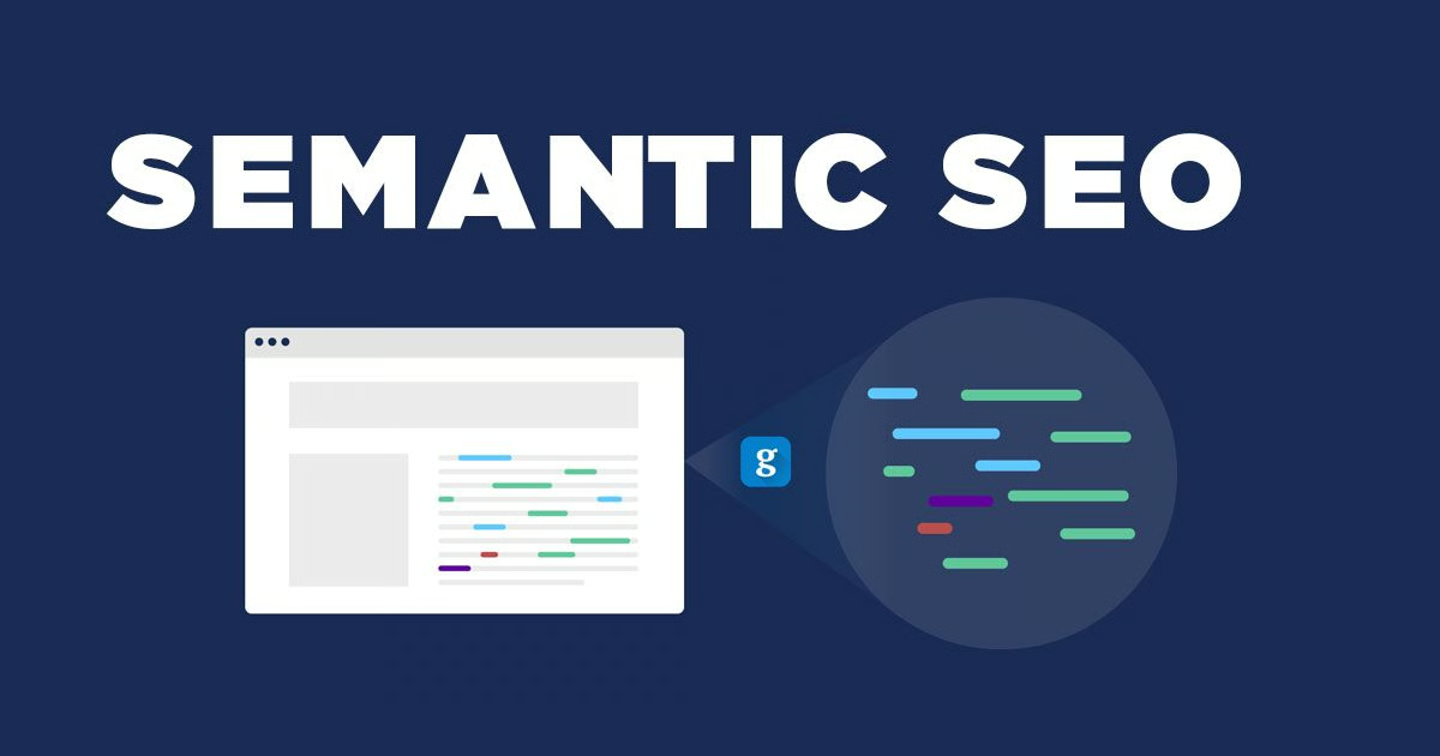
Semantic SEO: The Complete Guide to Boosting Your Website’s Relevance
In today’s digital landscape, simply using keywords isn’t enough to rank high on search engines. Semantic SEO focuses on understanding the meaning and context behind search queries, allowing your content to match what users truly intend to find. By optimizing for topics, concepts, and related terms—not just individual keywords—semantic SEO ensures your website communicates clearly with both search engines and your audience.
For businesses, educators, and content creators, mastering semantic SEO can be a game-changer. It improves content relevance, enhances user experience, and increases the chances of appearing in featured snippets, voice search results, and other rich search features. Instead of targeting isolated keywords, semantic SEO helps you create content that answers questions, solves problems, and engages visitors—ultimately driving more qualified traffic to your website.
At AQ Agency, we specialize in helping MENA businesses and educators implement modern SEO strategies, including semantic SEO, to achieve measurable results. From structuring content for better understanding to implementing schema markup and content clusters, our team ensures your website isn’t just found—it’s recognized as authoritative, trustworthy, and highly relevant in your industry.
What is Semantic SEO?
Semantic SEO is an advanced approach to search engine optimization that focuses on understanding the meaning, context, and intent behind search queries, rather than just targeting individual keywords. Instead of optimizing a page for a single word or phrase, semantic SEO emphasizes topics and related concepts, allowing search engines to better understand the relevance of your content. This approach ensures your pages answer users’ questions comprehensively, making your content more valuable and authoritative. Search engines like Google use semantic understanding to interpret the relationships between words, topics, and user intent. By analyzing context, synonyms, and related concepts, search engines can deliver results that are more accurate and helpful to the searcher. This is why pages optimized for semantic SEO often perform better in rankings—they match the broader intent behind a user’s query, not just isolated keywords. Implementing semantic SEO also significantly enhances user experience and engagement. When visitors find content that thoroughly addresses their needs and answers their questions, they are more likely to stay longer, explore related pages, and take action—whether that’s making a purchase, signing up for a newsletter, or enrolling in a course. For businesses, educators, and content creators, semantic SEO bridges the gap between search engine algorithms and real human intent, creating content that is both discoverable and genuinely useful. Deep topical authority helps you optimize your content for real human intent.Why Semantic SEO Matters for Your Website
Semantic SEO is essential for creating content that is highly relevant and valuable to both search engines and users. By focusing on topics and user intent rather than just isolated keywords, your website can achieve improved rankings, higher visibility, and better engagement. Search engines reward content that comprehensively addresses a topic, so pages optimized with semantic SEO are more likely to appear in top search results and attract qualified traffic. For small businesses and educators, semantic SEO is particularly powerful because it helps you connect with the right audience. By targeting the underlying intent behind search queries, you can ensure your content reaches potential customers or students who are actively seeking your products, services, or educational resources. This not only drives more relevant traffic but also increases the likelihood of conversions, whether it’s purchases, course sign-ups, or newsletter subscriptions. Additionally, semantic SEO plays a crucial role in modern search features such as voice search, featured snippets, and structured data optimization. Optimizing your content semantically allows search engines to understand it better, enabling your pages to appear in rich results that attract more clicks. For WordPress users, implementing semantic SEO strategies—including topic clustering, internal linking, and schema markup—can make your website more discoverable and engaging in today’s competitive digital landscape. When promoting your app, context and semantics are your best friends for ad relevance.Key Components of Semantic SEO
To fully leverage semantic SEO, it’s important to understand its core components. Each element helps search engines grasp the context and meaning of your content, while also improving user experience and engagement. Implementing these strategies ensures your website ranks higher and attracts the right audience.Topic Clustering & Content Hubs
Topic clustering involves grouping related content around a central pillar page. This structure helps search engines recognize your website as an authority on a particular subject and makes it easier for users to navigate and find relevant information. For example, a business offering digital marketing services could create a main page about “SEO Strategies” and link it to related articles on keyword research, link building, and content marketing. Educators can use course hubs, connecting main topics to detailed lesson pages. This method strengthens topical relevance and improves overall SEO performance.Structured Data & Schema Markup
Structured data, or schema markup, provides explicit information to search engines about the content on your pages. It helps Google and other engines understand the context of your content, increasing the chances of appearing in rich snippets, knowledge panels, or other enhanced search features. For instance, a blog post about a course could include schema markup for the course title, instructor, duration, and rating. A product page could include price, availability, and review data. Implementing schema markup enhances visibility and credibility, giving your content an SEO advantage.Internal Linking
Internal linking connects related pages within your website, creating semantic relationships between content. This helps search engines understand topic clusters and page hierarchy, while also guiding users through relevant content naturally. Small businesses can link product pages to blog articles explaining features or benefits. Educators can link lessons to related resources or supplemental materials. Effective internal linking distributes authority across pages and improves both crawlability and user experience. Improve topical relevance and you will see a significant drop in your bounce rate.Content Optimization
Semantic content optimization involves using LSI (Latent Semantic Indexing) keywords, synonyms, and natural language to make content more contextually relevant. Instead of repeating exact keywords, this approach ensures your content aligns with user intent and improves comprehension for both humans and search engines. For example, a page about “digital marketing tools” could naturally include related terms like “social media management software,” “SEO analytics,” or “content automation platforms.” This enriches the content, increases topical relevance, and boosts your chances of ranking for multiple related queries.Semantic SEO Automation and Tools
Semantic SEO can be time-consuming, but automation tools make it easier to research, analyze, and optimize content efficiently. By combining automation with human expertise, businesses and educators can implement semantic SEO strategies faster while maintaining high-quality, engaging content.1. SEMrush
SEMrush is an all-in-one SEO platform that helps identify related keywords, topic clusters, and search intent. Its content analyzer and keyword research tools allow you to optimize content semantically, discover LSI keywords, and track competitor strategies for better SEO performance.2. Ahrefs
Ahrefs offers a powerful site explorer and keyword research tool that helps you identify content gaps and semantic relationships between topics. Its “Content Explorer” feature is great for finding semantically relevant ideas that improve content authority.3. Surfer SEO
Surfer SEO focuses on content optimization and topic analysis, providing recommendations for related terms, headings, and word usage to enhance semantic relevance. It helps create well-structured, search-intent-aligned content for higher rankings.4. Clearscope
Clearscope is a content optimization tool that analyzes top-ranking pages for a keyword and suggests related terms, synonyms, and semantic keywords. This ensures your content covers the topic comprehensively while aligning with user intent.5. MarketMuse
MarketMuse uses AI to evaluate content completeness and topical coverage, helping you build semantic content clusters. It recommends keywords, subtopics, and related concepts to improve relevance and authority.6. Schema App
Schema App specializes in structured data and schema markup, making it easy to implement semantic markup across your website. Proper schema improves search engines’ understanding of your content, increasing chances for rich results.7. Frase
Frase combines content research and optimization by analyzing search intent and generating semantic content recommendations. It helps create topic-focused articles that match what users are actually searching for.8. Yoast SEO
Yoast SEO is a popular WordPress plugin that assists with on-page optimization, readability, and schema markup. Its tools guide users in improving semantic relevance through internal linking, metadata, and structured data.9. InLinks
InLinks helps with internal linking and entity-based SEO, creating semantic relationships between your pages. It also generates schema markup automatically, enhancing both SEO and user experience.10. Text Optimizer
Text Optimizer analyzes content for semantic relevance by suggesting related concepts and terms. It helps optimize articles for search intent, ensuring your content addresses the full topic rather than isolated keywords.HubSpot and Its Use of Semantic SEO
Why HubSpot is often used as a semantic SEO example — Instead of publishing loosely related blog posts about marketing topics, HubSpot adopted a “topic‑cluster + pillar” content architecture. For example, they might have one main “pillar” page like “The Ultimate Guide to Email Marketing,” which serves as the central hub for the topic, then multiple sub‑articles covering narrower but related subtopics: “Email Marketing Best Practices,” “Subject Line Examples,” “Email Automation Tools,” etc. This structure signals to search engines that HubSpot isn’t just targeting one keyword, but covering the entire subject comprehensively and authoritatively. Backlink Guys+2Content Hurricane+2 By using this semantic structure, HubSpot benefits from topic authority rather than just ranking for a single keyword phrase. Because all the cluster articles are connected via internal links to the central pillar page — and to each other — search engines treat the whole cluster as deeply relevant to the overall topic (in this case: “email marketing”). That increases the website’s chances of ranking not only for the main keyword but for many related queries and long‑tail variations too. Backlink Guys+2seoguidelab.com+2 From the user experience side, this semantic organization improves navigation and engagement. A visitor looking for “how to write email subject lines” might enter via a cluster page — then easily jump to related content on “email automation tools” or “email marketing best practices.” This gives a satisfying, comprehensive user journey, reduces bounce rates, and encourages deeper on‑site exploration. All of this sends positive behavioral signals to search engines. Content Hurricane+2Search Engine Journal+2 Moreover, by treating each piece of content as part of a broader topic network, HubSpot effectively builds “topical authority.” Rather than thin articles chasing one keyword, their content becomes a resource library. Over time, this builds trust and expertise in the eyes of both users and algorithms — aligning with modern SEO standards that value context, depth, and semantic relevance over simple keyword frequency. Backlink Guys+2Search Engine Journal+2 In short: HubSpot’s semantic‑SEO strategy transforms their site from a collection of disparate posts into a cohesive knowledge hub. That hub approach gives them greater visibility across a spectrum of related search queries, better user engagement, and stronger long‑term SEO sustainability — a model worth emulating for businesses, educators, and content creators alike.Common Semantic SEO Mistakes to Avoid
- Keyword stuffing instead of topic relevance.
- Ignoring structured data and schema markup.
- Weak internal linking or scattered content clusters.
- Failing to analyze search intent and user behavior.
How AQ Agency Can Help You with Semantic SEO
At AQ Agency, we specialize in delivering full semantic SEO strategies designed for small businesses and educators in the MENA region. Our approach focuses on understanding your audience, identifying topic clusters, and implementing content that aligns with search intent—ensuring your website is both authoritative and highly relevant. We provide content planning, WordPress implementation, and schema markup services to help your pages communicate clearly with search engines. From creating pillar pages to linking cluster content and applying structured data, our team ensures your website is optimized for both human visitors and algorithms. Additionally, AQ Agency leverages analytics-driven optimization to track performance, adjust strategies, and maximize results. This ensures higher search rankings, improved user engagement, and measurable traffic growth, making semantic SEO a key driver of online success.Conclusion & Next Steps
Semantic SEO is essential for achieving relevance, engagement, and higher rankings in today’s competitive online landscape. By focusing on structured data, topic clusters, and strategic automation, your website becomes more understandable to search engines and more valuable to visitors. To maximize the benefits of semantic SEO, it’s crucial to implement a well-planned strategy tailored to your business or educational website. AQ Agency offers expert guidance and hands-on implementation to help you achieve this. Contact AQ Agency today to start building a semantic SEO strategy that drives traffic, engagement, and long-term growth. Search engines love natural language, making User-Generated Content a semantic goldmine.Frequently Asked Questions (FAQs)
Q1: What is semantic SEO and how does it differ from traditional SEO? Semantic SEO focuses on the meaning, context, and intent behind search queries rather than targeting single keywords. Traditional SEO often emphasizes keyword density, whereas semantic SEO prioritizes topic relevance, content depth, and user satisfaction. Q2: How do I implement semantic SEO in WordPress? You can implement semantic SEO in WordPress by creating topic clusters with pillar and cluster pages, using internal linking strategically, optimizing content with LSI keywords, and adding schema markup through plugins or custom coding. Q3: What is semantic markup and why is it important? Semantic markup (structured data/schema) helps search engines understand the context of your content. It enables rich results, enhances visibility in SERPs, and strengthens your website’s credibility and authority. Q4: Can automation improve semantic SEO? Yes, automation tools can assist with keyword research, topic clustering, semantic analysis, and schema implementation. However, human oversight is essential to maintain content quality, relevance, and engagement. Q5: How does semantic SEO help small businesses or educators increase traffic? Semantic SEO improves website relevance and authority, helping search engines understand and rank your content for a wider range of related queries. This results in more qualified traffic, better engagement, and higher conversion rates for small businesses and educational websites.
Recent Posts

abdelrahman.qazaer@gmail.com/0 Comments
Long-Form Video Content: The Ultimate Guide for Marketers

abdelrahman.qazaer@gmail.com/0 Comments
Visual Design in Ads

abdelrahman.qazaer@gmail.com/0 Comments