


Content Repurposing: Maximize ROI Through Cross-Channel Reuse & Content Recycling
December 4, 2025
/
Content Repurposing: Maximize ROI Through Cross-Channel Reuse & Content Recycling
In today’s fast-paced digital landscape, businesses often create high-quality content only to let it sit idle, unused, or underperforming. Studies show that companies waste 60–70% of their content potential by failing to repurpose it effectively. This represents missed opportunities for engagement, SEO growth, and cross-channel reach.
Businesses looking to implement an effective content repurposing strategy can rely on AQ, a trusted agency specializing in strategy and planning for cross-channel content reuse. With AQ’s expertise, brands can systematically audit, adapt, and distribute content to maximize ROI while maintaining consistent messaging and quality.
What Is Content Repurposing?
Content repurposing is the strategic process of taking existing content and transforming it into new formats or adapting it for different channels. The goal is to maximize the value, reach, and lifespan of each piece of content, rather than creating new material from scratch every time.Definition & Key Concepts
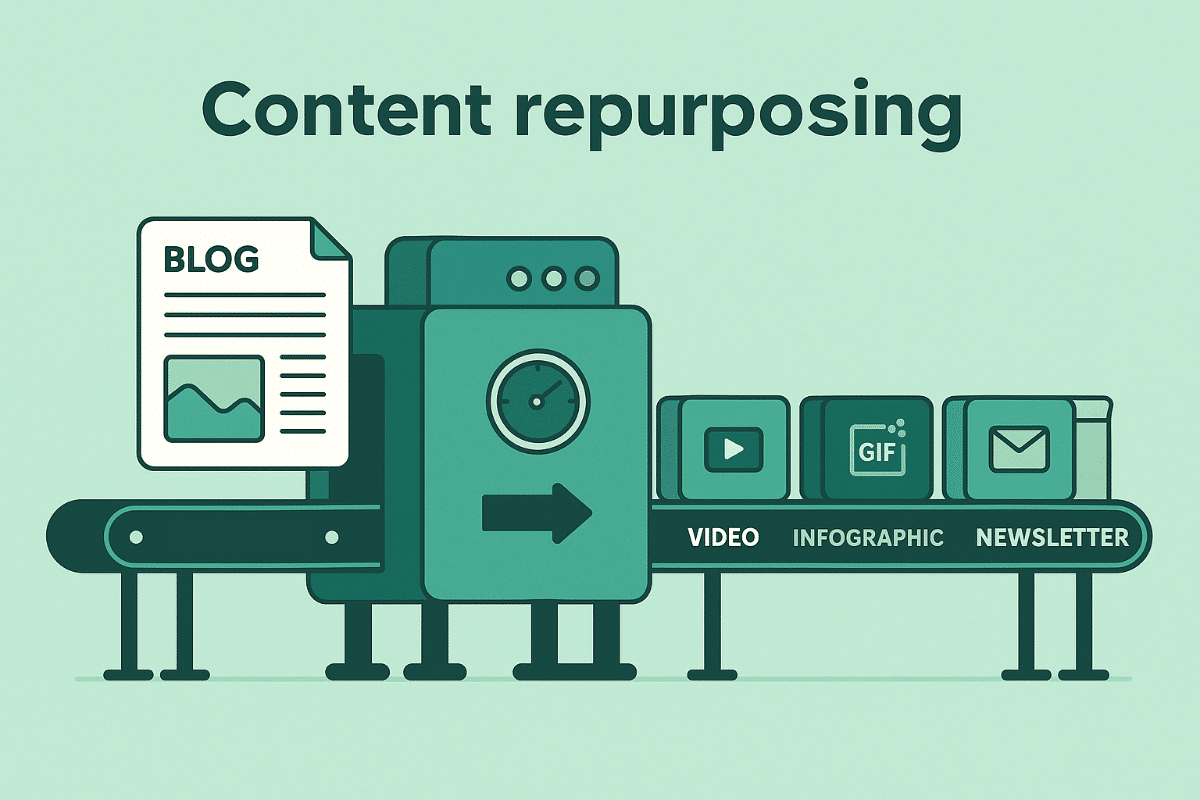
While often used interchangeably, content repurposing and content recycling have subtle differences:- Content Repurposing: Transforming a piece of content into a new format to reach a different audience or platform. For example, turning a blog post into a video, infographic, podcast snippet, or social media carousel. This approach targets fresh engagement and audience segments.
- Content Recycling: Updating or refreshing existing content to keep it relevant, such as revising an old blog post with new statistics, optimizing it for SEO, or re-sharing it on social platforms. This focuses on maintaining value and boosting longevity.
Types of Repurposable Content
Not all content is created equal when it comes to repurposing. Some formats lend themselves naturally to cross-channel adaptation, allowing businesses to maximize reach and engagement. Below are the main types of content you can repurpose and strategies for doing so effectively.Blogs
Blog posts are highly versatile and can serve as the foundation for multiple formats. Key strategies include turning long-form posts into infographics, social media carousels, email newsletters, or video scripts, extending their reach across different channels while boosting SEO through internal linking.Whitepapers
Whitepapers are rich in data and insights, making them ideal for condensed guides, slide decks, or blog series. By breaking down complex information into bite-sized content for social media or webinars, businesses can engage audiences who prefer quick, digestible content.Videos
Videos can be repurposed in many ways to increase visibility. Short clips or highlight reels can be used for social media, stories, or paid ad campaigns, while transcripts can be converted into blogs or podcasts to reach audiences who prefer reading or audio content.Podcasts
Podcasts offer valuable insights that can be adapted into multiple formats. Show notes and transcripts can become blogs, social media quotes, or email content, while popular episodes can inspire infographics or video snippets to engage a broader audience.Webinars
Webinars contain deep-dive information suitable for repurposing into on-demand videos, short educational clips, or downloadable guides. Key takeaways can also be shared on social media or as blog posts, increasing content lifespan and lead generation potential.Social Media Posts
Even short social content can be reused creatively. Collections of posts can be transformed into email newsletters, blog posts, or visual collages, while trending topics can be expanded into more detailed content formats like videos or infographics. Expert Tip: Agencies like AQ can help map each content type to the most effective cross-channel strategy, ensuring maximum engagement and ROI while maintaining brand consistency. When you optimize blog content, you create a foundation for all social media posts.Why Content Repurposing Matters for SEO & Marketing
Repurposing content can significantly improve your website’s SEO performance. By transforming a single piece of content into multiple formats blogs, videos, infographics, or social posts you increase the number of entry points for search engines to index. This not only boosts rankings but also creates more opportunities for backlinks and internal linking, enhancing domain authority and driving consistent organic traffic. Cross-channel content reuse helps brands expand their reach across platforms like LinkedIn, Instagram, YouTube, and more. Consistently delivering valuable information in different formats positions your brand as an expert in your niche, builds audience trust, and increases engagement. At the same time, repurposing content is highly cost- and time-efficient, allowing businesses to maximize ROI by leveraging existing high-performing assets rather than creating new content from scratch.Cross-Channel Reuse: How to Adapt Content
Repurposing content across multiple channels ensures that your message reaches the right audience in the right format. By adapting existing content to fit different platforms, businesses can maximize engagement, extend content lifespan, and maintain brand consistency.Blogs to Social Media
Long-form blog posts can be condensed into engaging social media content such as carousels, short videos, or quote graphics. Highlighting key insights or statistics from a blog allows brands to capture attention quickly while driving traffic back to the full article.Videos to Blogs & Infographics
Video content can be transformed into blogs or written guides using transcripts, while key data points and insights can be turned into infographics. This approach allows audiences who prefer reading or visual content to engage with the material.Podcasts to Articles & Snippets
Podcast episodes can be repurposed by creating show notes, blog articles, or social media snippets. Extracting key takeaways and quotes helps brands reach audiences who may not listen to podcasts but still value the content.Webinars to On-Demand Videos & Guides
Webinars often contain valuable, in-depth insights that can be converted into on-demand videos, educational clips, or downloadable guides. Sharing these highlights on social media or via email campaigns helps maximize their impact.Case Studies to Social Media Carousels
Detailed case studies can be broken down into smaller, digestible pieces for social media. Carousels, quote cards, or short videos allow key results and learnings to reach broader audiences while maintaining credibility. Reach customers multiple times by using retargeting with different content formats.How to Create a Content Repurposing Plan
Creating a structured content repurposing plan ensures that every piece of content reaches its maximum potential. A clear plan helps identify high-value assets, define cross-channel strategies, and streamline execution, saving time and increasing ROI.1. Conduct a Content Audit
Start by reviewing all existing content to identify high-performing assets with potential for repurposing. Analyze metrics like traffic, engagement, shares, and backlinks to determine which blogs, videos, podcasts, or social posts can deliver the most value when adapted for other channels.2. Define Your Goals
Set clear objectives for your repurposing strategy. Goals could include increasing reach, boosting SEO, improving engagement, or generating leads. Having measurable goals ensures that every repurposed piece serves a strategic purpose.3. Map Content to Channels
Determine the most effective channels for each piece of content. For example, blog posts might become social media snippets or email newsletters, while webinars can be transformed into video highlights or downloadable guides. Map content to channels based on audience preferences and platform strengths.4. Establish a Content Calendar
Plan your repurposed content in a content calendar, scheduling posts across multiple platforms. A calendar ensures consistent messaging, avoids duplication, and allows for coordination with other marketing campaigns.5. Create Templates & Guidelines
Develop templates and guidelines for different content formats to maintain brand consistency. For example, design templates for infographics, social posts, and video clips streamline production while keeping the content visually cohesive.6. Track Performance & Optimize
Monitor engagement, traffic, and conversions for repurposed content. Use analytics to identify which formats and channels perform best, then refine your strategy accordingly to improve ROI over time. Expert Tip: Agencies like AQ provide end-to-end planning, including audits, channel mapping, content calendars, and performance tracking, ensuring that your repurposing plan is strategic, measurable, and efficient. Adopt a scaling strategy that emphasizes efficiency and content reuse.Tools to Aid Content Repurposing
The right tools can make content repurposing faster, more efficient, and more effective. By leveraging creation, automation, and analytics tools, businesses can streamline workflows, maintain quality, and measure performance across channels.Content Creation & Editing Tools
Tools like Canva, Adobe Creative Cloud, and Grammarly help transform existing content into new formats while maintaining professional quality. Canva is ideal for social graphics and presentations, Adobe Creative Cloud supports advanced video and design work, and Grammarly ensures all written content is clear, polished, and optimized for readability.Automation & Scheduling Tools
Platforms such as Buffer, Hootsuite, HubSpot, and Zapier simplify cross-channel content distribution. They allow you to schedule posts, automate repetitive tasks, and maintain consistent publishing across blogs, social media, and email campaigns, freeing up time for strategic work.Analytics Tools
Analytics platforms like Google Analytics, SEMrush, and Ahrefs provide insights into how repurposed content performs. Track traffic, engagement, keyword rankings, backlinks, and conversions to refine your content strategy and ensure every piece contributes to ROI. Expert Tip: Agencies like AQ integrate these tools into a full content repurposing workflow, combining human creativity with data-driven insights to maximize results. Boost your reach by using the right hashtags for every repurposed post.AQ’s Approach to Content Repurposing
AQ leverages its extensive experience and expertise to help businesses maximize the value of their existing content through strategic repurposing. Their approach includes:- Full Content Audit: AQ reviews all existing content to identify high-value assets suitable for repurposing across channels.
- Cross-Channel Strategy: They design tailored strategies for social media, email, blogs, videos, and more, ensuring each format reaches the right audience.
- Custom Workflow: Combining human creativity with AI-assisted content creation, AQ ensures efficiency without compromising quality.
- Monthly Analytics & Performance Review: Continuous monitoring helps refine strategies, improve engagement, and maximize ROI.
- Case Study: One client saw a 3x increase in engagement by recycling and adapting existing content with AQ’s strategy.
Conclusion
Content repurposing allows brands to work smarter, not harder. By transforming existing assets into multiple formats and distributing them across channels, businesses can boost reach, enhance SEO, and drive engagement. With AQ’s expertise in strategy and planning, companies can implement structured workflows that ensure every piece of content achieves its full potential. Contact AQ to transform your existing content into a high-performing, multi-channel marketing asset.”FAQ Section
Q1: What is the difference between content repurposing and recycling? A1: Repurposing transforms content into new formats for different channels, while recycling updates existing content to keep it relevant. Q2: How often should content be repurposed? A2: High-performing and evergreen content can be repurposed multiple times, depending on audience interest and platform relevance. Q3: Can repurposing improve SEO rankings? A3: Yes, by creating multiple entry points for search engines, repurposed content increases visibility, backlinks, and internal linking opportunities. Q4: Which types of content perform best for repurposing? A4: Blogs, videos, podcasts, webinars, whitepapers, and social media posts are highly adaptable across channels. Q5: How does AQ help businesses with cross-channel reuse? A5: AQ provides a structured strategy, full audits, cross-channel mapping, custom workflows, and performance tracking to ensure every piece of content delivers maximum ROI.
Recent Posts

abdelrahman.qazaer@gmail.com/0 Comments
Keyword Stuffing: The Ultimate Guide for Safe and Effective SEO in UAE and Jordan

abdelrahman.qazaer@gmail.com/0 Comments
Short-Form Social Posts: Comprehensive Guide for UAE & Jordan Businesses

abdelrahman.qazaer@gmail.com/0 Comments