


Conversion Rate Optimization (CRO): How to Turn Website Traffic into Paying Customers
October 30, 2025
/
Conversion Rate Optimization (CRO): How to Turn Website Traffic into Paying Customers
In the digital marketing world, attracting traffic to your website is just the first step. The real challenge is turning visitors into paying customers, subscribers, or leads. This is where Conversion Rate Optimization (CRO) comes in.
CRO refers to the process of improving your website or landing page to increase the percentage of visitors who take a desired action. Whether it’s completing a purchase, filling out a form, or signing up for a newsletter, conversion rate optimization is a critical strategy for maximizing the value of your existing traffic.
For businesses operating in e-commerce, SaaS, or service industries, implementing CRO strategies can significantly boost revenue, improve user experience, and enhance overall marketing ROI.
What Is Conversion Rate Optimization (CRO)?
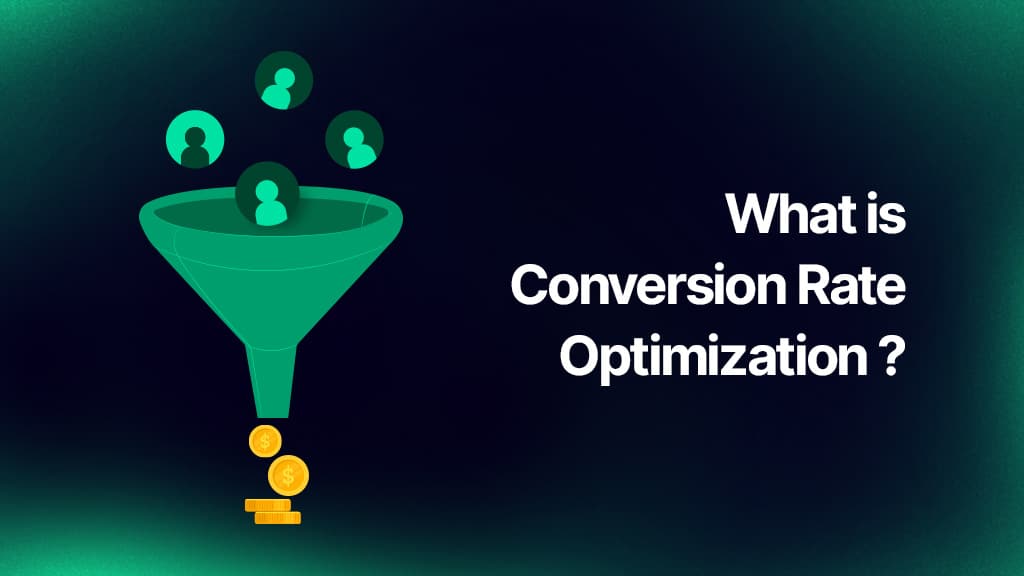
Conversion Rate Optimization (CRO) is the process of improving your website or landing page so that a higher percentage of visitors take a desired action — whether that’s making a purchase, filling out a form, booking a demo, or subscribing to a newsletter. In simple terms, CRO helps you turn traffic into tangible results. Instead of spending more on ads or SEO to get new visitors, you focus on maximizing the value of the traffic you already have.Why CRO Is Essential for Every Online Business
Every click costs you — through ads, time, or effort. But not every visitor converts. That’s where CRO comes in. By analyzing user behavior, testing design elements, and refining your messaging, you can identify what’s stopping users from taking action — and fix it. A well-optimized conversion funnel:- Reduces bounce rates
- Increases sales and leads
- Improves user experience
- Boosts ROI from all marketing channels
The Core Elements of a Successful CRO Strategy
A successful Conversion Rate Optimization (CRO) strategy isn’t about quick fixes — it’s about understanding how real users interact with your website and guiding them smoothly toward conversion. To truly optimize performance, you need a mix of user psychology, data-driven testing, and clear communication. Below are the four pillars that form the foundation of an effective CRO strategy — each one working together to build trust, reduce friction, and turn visitors into loyal customers.User Experience (UX) and Design Psychology
Your website’s design is your silent salesperson. Every color, shape, and element placement communicates emotion and influences decisions. Good UX isn’t just about beauty — it’s about clarity, flow, and confidence. Studies show that first impressions are formed within 0.05 seconds. A cluttered layout, poor spacing, or confusing navigation can immediately increase bounce rates. Using heatmaps and behavior-tracking tools like Hotjar or Microsoft Clarity, you can identify where users hesitate, scroll less, or abandon the page. To optimize UX:- Use clear visual hierarchy — key CTAs should stand out using contrast and whitespace.
- Apply color psychology — blue builds trust, orange triggers enthusiasm, and green encourages action.
- Keep mobile UX seamless — over 60% of conversions now happen on mobile devices.
Copywriting and Messaging Alignment
Words sell — design supports. The right copy connects emotionally and communicates value instantly. High-performing CRO copy aligns emotions + clarity + benefits, focusing less on what you offer and more on what users gain. For example: ❌ “Sign up for our newsletter.” ✅ “Get expert marketing insights that help you grow revenue — delivered weekly.” Effective CRO copywriting leverages triggers like curiosity, urgency, trust, and exclusivity. Every headline, CTA, and paragraph should answer the visitor’s unspoken question: “What’s in it for me?”A/B Testing and Data Analysis
Even the most experienced marketers can’t predict exactly what will convert — that’s why testing is non-negotiable. A/B testing allows you to compare two versions of a webpage or element (like a headline, CTA, or image) to see which performs better with real users. For instance, changing a CTA from “Buy Now” to “Get My Free Demo” might increase conversions by 25%. Pair tests with analytics tools like Google Optimize, VWO, or Optimizely to measure user behavior, engagement, and drop-off rates. The key is to test one variable at a time, gather enough data, and make decisions based on evidence — not assumptions.Funnel Optimization and Customer Journey Mapping
CRO isn’t just about individual pages — it’s about the entire customer journey. From the first touchpoint to post-purchase engagement, each stage of the funnel must build trust and momentum. A typical journey follows four stages:- Awareness: The visitor discovers your brand — focus on education and value.
- Interest: They engage with content or offers — highlight relevance and proof.
- Action: Encourage conversion through frictionless UX and compelling CTAs.
- Retention: Keep customers engaged with follow-up emails, offers, and loyalty programs.
Proven CRO Techniques That Work in 2025
In 2025, Conversion Rate Optimization is more data-driven and user-centric than ever before. The most effective brands don’t guess — they personalize experiences, build trust, simplify decisions, and re-engage visitors intelligently. Below are the top CRO techniques that consistently boost conversions — along with how to use each one effectively on your website or campaigns.1. Personalization and AI-Driven Recommendations
Personalization is no longer optional — it’s expected. Visitors want content, products, and offers that feel tailor-made for them. AI now allows marketers to analyze user behavior in real-time and deliver personalized recommendations that increase engagement and conversions. How to use:- Use tools like Dynamic Yield, Adobe Target, or Google Optimize to display product recommendations or dynamic content based on user segments.
- Personalize CTAs (e.g., “Welcome back, Samir — ready to continue your plan?”).
- Adjust homepage banners or pricing plans based on user intent or location.
2. Social Proof and Trust Badges
People trust people — not pixels. Social proof acts as a psychological trigger that reduces hesitation and builds credibility. When users see testimonials, reviews, certifications, or client logos, they feel safer taking action. How to use:- Add testimonial sliders or video testimonials on landing pages.
- Display “Trusted by [X] Clients” with recognizable brand logos.
- Use trust badges during checkout (SSL, secure payment, verified business).
- Include real user reviews, not just star ratings.
3. Simplified Forms and Checkout Processes
Friction kills conversions. Every unnecessary field, extra click, or confusing layout makes users drop off. In 2025, brands winning with CRO are those that create seamless, one-step experiences. How to use:- Reduce form fields to essentials (name, email, and one qualifying question).
- Use autofill, progress bars, and inline validation for smooth input.
- Offer guest checkout and one-click payment options (Apple Pay, Google Pay).
- Test form placement — inline vs. pop-up — to see what converts better.
4. Urgency and Scarcity Triggers (Ethical Use)
Urgency and scarcity motivate action — but only when they’re authentic and ethical. The goal is not to pressure users but to highlight real-time opportunities that encourage timely decisions. How to use:- Display stock counters (e.g., “Only 3 left in stock!”).
- Use countdown timers for limited-time discounts.
- Add time-sensitive incentives like “Book within 24 hours for free shipping.”
- Combine urgency with transparency — never fake deadlines.
5. Retargeting and Behavioral Segmentation
Most visitors don’t convert the first time — but that doesn’t mean they’re lost. Retargeting helps bring them back by showing personalized ads based on what they viewed or abandoned. Combined with segmentation, it becomes a powerful CRO lever. How to use:- Set up retargeting campaigns via Meta Ads, Google Ads, or LinkedIn.
- Segment audiences by behavior — cart abandoners, content readers, demo visitors.
- Use dynamic ads showing the exact product or offer the user viewed.
- Retarget with value, not repetition — offer helpful resources or social proof.
Tools and Platforms for CRO Success
The right tools make Conversion Rate Optimization (CRO) measurable, repeatable, and scalable. Here are the top platforms every marketer should use in 2025 — and how to use each effectively:-
- Hotjar: Visualize user behavior with heatmaps, session recordings, and feedback polls.
- Optimizely: Industry-standard platform for A/B and multivariate testing.
- VWO (Visual Website Optimizer): All-in-one CRO suite with A/B testing, heatmaps, and behavioral targeting.
- Google Analytics 4 (GA4): Tracks user journeys, conversion funnels, and event-based metrics.
- Crazy Egg: Focused on visual analytics — scrollmaps, clickmaps, and user recordings.
How to Build a CRO Roadmap for Your Business
A well-defined CRO roadmap turns guesswork into a systematic process for sustainable growth. Instead of making random website tweaks, you follow a data-driven plan that aligns with your business goals, target audience, and user behavior insights. Think of it as your conversion GPS — guiding you from observation to implementation, ensuring every decision moves you closer to higher ROI and customer satisfaction. Below is a step-by-step framework to help you build a conversion optimization roadmap that works — not just once, but continuously.1. Set Measurable Goals
Start by defining specific, measurable, and time-bound goals. Avoid vague targets like “improve conversions.” Instead, set actionable KPIs such as:- Increase sign-ups by 15% in 60 days
- Boost average order value by 10%
- Reduce cart abandonment by 20%
2. Analyze User Data
Before optimizing anything, understand your audience. Use analytics and behavioral tools (Google Analytics, Hotjar, Crazy Egg) to identify what’s working and where users drop off. Focus on metrics like:- Bounce rate
- Click-through rate (CTR)
- Session duration
- Heatmap patterns
- Conversion paths
3. Create Hypotheses
Once you identify friction points, form hypotheses that explain what’s preventing conversions and how to fix it. A strong hypothesis follows this structure: “If we [make this change], then [this outcome] will occur because [reason based on data or behavior].” Example: “If we reduce the number of form fields from 6 to 3, then sign-ups will increase by 20% because users find shorter forms less intimidating.” This logical, testable approach ensures your experiments have clear direction and measurable results.4. Test and Implement
Next, run controlled experiments to validate your hypotheses.- Use A/B or multivariate testing for high-traffic pages.
- Test only one key variable at a time (e.g., headline, button color, or image).
- Allow enough data collection to reach statistical significance.
5. Review and Iterate
CRO is not a one-time task — it’s an ongoing process of learning, testing, and evolving. User behavior changes over time, and what worked last quarter may not work next. Schedule monthly or quarterly reviews to analyze performance data, identify new opportunities, and refine your roadmap. Continuous iteration ensures your conversions keep improving even as market dynamics shift.Common CRO Mistakes to Avoid
Even small missteps can hurt your conversion rates. Here are the most common CRO mistakes to watch out for:- Relying on assumptions instead of data-driven insights.
- Testing too many variables at once — stick to one change per test.
- Ignoring mobile UX, where most users convert.
- Skipping post-test analysis, failing to learn from results.
- Focusing only on design and neglecting copy or messaging.
- Not tracking micro-conversions like clicks and scroll depth.
- Lack of a testing plan — random changes rarely deliver consistent growth.
Measuring CRO Success: Key Metrics & KPIs
To know whether your CRO efforts are paying off, you need to track the right performance indicators — not just traffic or clicks. The core CRO metrics include your conversion rate (percentage of visitors completing your goal), bounce rate (how many leave without engaging), average order value (AOV), and customer lifetime value (CLV). Together, these metrics reveal how effectively your site converts visitors into revenue. Go beyond vanity metrics and focus on insights that show real behavior. For example, pairing heatmap data with conversion tracking helps uncover why users drop off, while session recordings show how they navigate and engage. Use dashboards from Google Analytics, Hotjar, or VWO to visualize progress and spot trends. Over time, monitoring these KPIs ensures your CRO strategy remains data-driven, consistent, and profitable.Why Choose AQ Media Above Quality for CRO Optimization
At AQ Media Above Quality, we don’t just drive traffic — we turn it into measurable growth. As a leading digital marketing agency based in Amman, Jordan, our team specializes in Conversion Rate Optimization (CRO) that blends psychology, analytics, and design to help brands increase revenue and engagement. We use a data-driven, tested-and-proven CRO framework — combining user behavior insights, A/B testing, and persuasive content strategy — to identify what motivates your visitors to convert. Whether you want to improve landing page performance, lower bounce rates, or scale eCommerce conversions, AQ Media delivers results that are trackable, transparent, and sustainable.Final Thoughts: Turning Data into Revenue Growth
Conversion Rate Optimization isn’t a one-time project — it’s an ongoing discipline that combines data, psychology, and user experience. When you track the right metrics, test intentionally, and continuously refine your website, you turn insights into predictable business growth. Every improvement — no matter how small — compounds over time, creating loFrequently Asked Questions (FAQs) About CRO
- What does CRO mean in marketing?
- Why is CRO important for my business?
- How long does it take to see CRO results?
- What tools are best for CRO?
- Do I need technical skills to do CRO?

Recent Posts

abdelrahman.qazaer@gmail.com/0 Comments
Long-Form Video Content: The Ultimate Guide for Marketers

abdelrahman.qazaer@gmail.com/0 Comments
Visual Design in Ads

abdelrahman.qazaer@gmail.com/0 Comments