


Native Advertising Explained: Sponsored Content, In-Feed Ads & Targeting
December 16, 2025
/
Native Advertising Explained: Sponsored Content, In-Feed Ads & Targeting
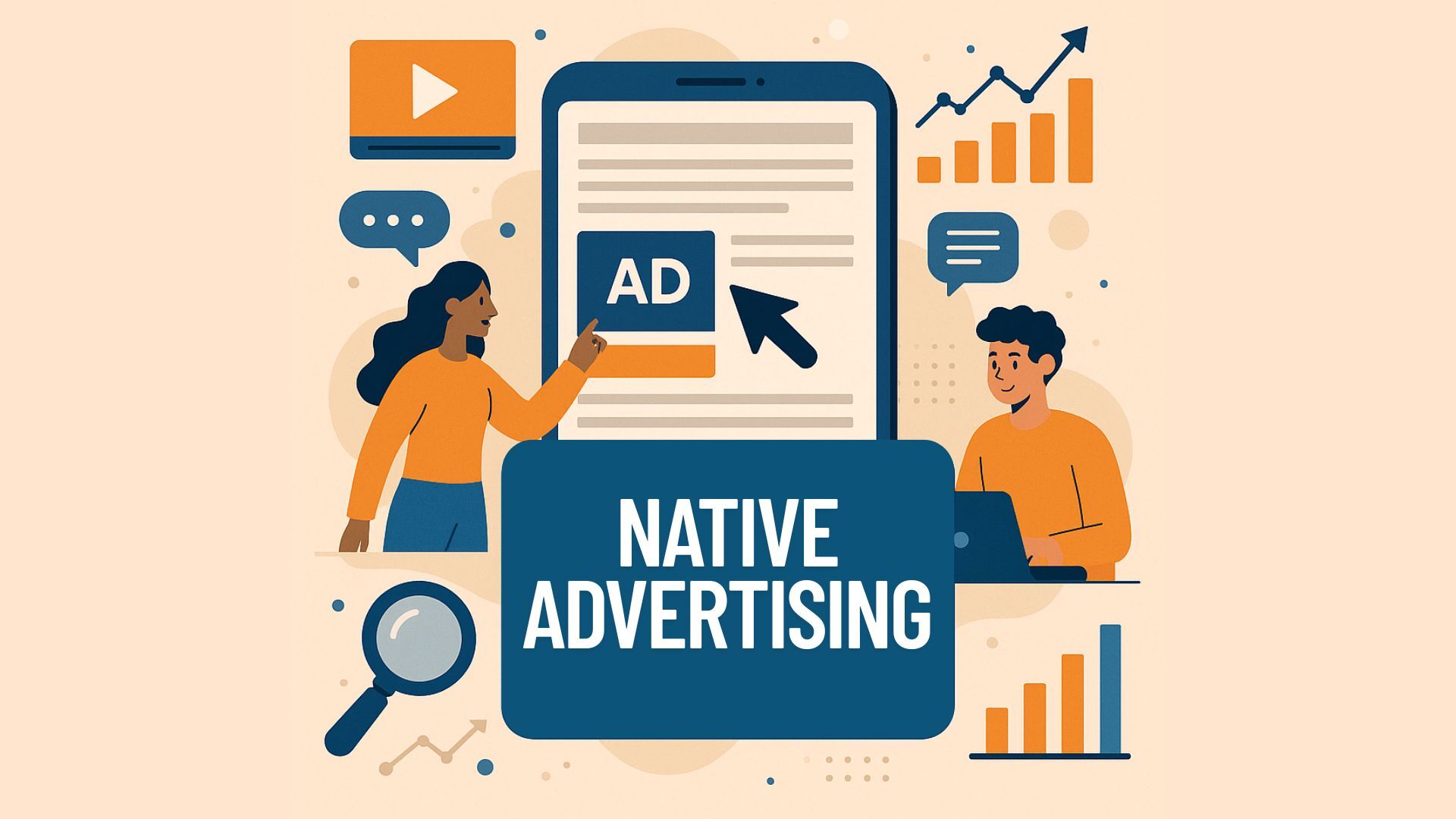
Native advertising is a digital advertising format designed to blend seamlessly into the platform where it appears, matching the look, feel, and function of the surrounding content. Unlike traditional display ads that interrupt the user experience, native ads appear naturally within content feeds, articles, or recommendations—making them less intrusive and more engaging for users.
By aligning with how people already consume content, native advertising delivers promotional messages in a way that feels relevant rather than disruptive. Common examples include sponsored articles on trusted publishers, in-feed ads on social media platforms, and content recommendations that align closely with a user’s interests and browsing context.
Today, native advertising is considered one of the most effective digital advertising formats because it prioritizes user experience while still driving measurable results. With higher engagement rates, stronger brand trust, and the ability to leverage privacy-friendly contextual targeting, native ads help brands connect with audiences in a more authentic and credible way—making them a key strategy in modern, trust-driven digital marketing.
What Is Native Advertising?
Native advertising is a paid advertising strategy where promotional content is designed to match the form, style, and function of the platform on which it appears. Instead of standing out as an obvious advertisement, native ads integrate naturally into the surrounding content, making them feel like a seamless part of the user experience.Core Principles of Native Advertising
At its core, native advertising is built on relevance and alignment. The content must:- Match the visual design of the platform
- Follow the same content format as organic posts or articles
- Deliver value that aligns with user intent
- Be clearly labeled as sponsored to maintain transparency and trust
Native Ads vs Traditional Display Ads
The main difference between native advertising and traditional display ads lies in how users experience them. Display ads are visually separated from content and often rely on banners or pop-ups that interrupt browsing. Native ads, on the other hand, appear within content feeds or editorial environments, making them easier to consume and more likely to generate engagement. Because native ads blend in visually and contextually, users are less likely to ignore them—a phenomenon commonly known as ad blindness.Why Native Ads Feel Less Intrusive
Native ads feel less intrusive because they respect how users naturally consume content. Instead of pulling attention away from the experience, they enhance it by providing relevant information at the right moment. When combined with contextual targeting, native advertising delivers messages that align with the content users are already interested in, increasing trust and engagement.Discover more about expanding your brand's reach authentically through strategic Influencer Ads.
Types of Native Advertising Formats
Native advertising includes several formats, all designed to integrate naturally into the platform where they appear. While each format serves a different purpose, they share one goal: delivering promotional messages without disrupting the user experience.Sponsored Content
Sponsored content is a form of native advertising where brands pay publishers or platforms to create editorial-style content that aligns with the publisher’s tone, audience, and format. Unlike direct sales ads, sponsored content focuses on educating, informing, or entertaining users while subtly promoting a brand, product, or service. Brands use sponsored content to build credibility and trust by appearing alongside authoritative editorial content. This approach allows them to tell deeper stories, explain complex solutions, and position themselves as experts rather than advertisers. Common examples of sponsored content include:- Sponsored blog posts on high-authority websites
- Publisher partnerships featuring branded articles
- Long-form educational content labeled as “Sponsored”
In-Feed Ads
In-feed ads are native ads that appear directly within content feeds, matching the design and format of organic posts. These ads are commonly found in social media feeds, news websites, and online marketplaces, where they blend naturally into the scrolling experience. Where in-feed ads appear:- Social media feeds
- News and media websites
- Content discovery platforms
- E-commerce and marketplace feeds
Contextual Targeting in Native Advertising
Contextual targeting is a privacy-first targeting method that displays ads based on the content a user is currently consuming rather than their personal data. In native advertising, this means ads are shown alongside relevant articles, videos, or feeds that align with the ad’s topic. Unlike behavioral targeting, contextual targeting works without third-party cookies, making it compliant with modern privacy regulations. This approach ensures ads remain relevant while respecting user privacy, which is why it’s considered future-proof and increasingly important in today’s digital advertising ecosystem.Discover more about forging a deeper emotional connection with your audience through powerful Brand Storytelling.
How Native Advertising Works Step-by-Step
Native advertising follows a strategic execution process designed to align ads with user intent and platform expectations. First, brands conduct audience research and intent analysis to understand what users are searching for and consuming. Next, content is created to match the platform’s style, tone, and format—whether that’s an editorial article or a short-form in-feed post. The content is then placed within relevant content feeds using native ad platforms. Targeting can be contextual, behavioral, or a combination of both, depending on privacy requirements and campaign goals. Finally, performance is tracked through engagement metrics, CTR, conversions, and optimization cycles to improve results over time.Discover more about maintaining audience engagement with a balanced and strategic Social Media Content Mix.
Benefits of Native Advertising for Brands
Native advertising delivers measurable benefits by prioritizing user experience and relevance. Brands often see higher engagement rates because native ads blend seamlessly into content environments. Click-through rates (CTR) tend to outperform display ads, while brand trust and recall improve due to the non-intrusive nature of the format. Native ads also offer a seamless mobile experience, which is critical as most content consumption happens on mobile devices. By avoiding disruptive formats, native advertising reduces ad blindness and increases long-term brand value.Native Advertising vs Other Digital Ad Formats
| Ad Type | User Experience | Engagement | Trust |
| Native Advertising | High | High | High |
| Display Ads | Low | Low | Low |
| Search Ads | Medium | Medium | Medium |
| Social Ads | Medium–High | Medium–High | Medium |
Discover more about automating and optimizing ad buying at scale with efficient Programmatic Advertising.
Best Platforms for Native Advertising
Several platforms specialize in delivering high-performing native ad placements. Google Discovery Ads appear across Google’s ecosystem, reaching users during content discovery moments. Outbrain and Taboola focus on content recommendation widgets across premium publishers. Meta platforms such as Facebook and Instagram excel at in-feed native ads with advanced targeting capabilities. LinkedIn Sponsored Content is ideal for B2B audiences, while publisher networks offer direct access to niche, high-authority audiences. Each platform supports different goals, from awareness to lead generation.Discover more about organizing a focused and effective social media plan with clear Content Pillars for Social.
Conclusion
Native advertising combines sponsored content, in-feed ads, and contextual targeting into a user-first advertising strategy. By aligning with SEO, trust, and content marketing principles, it offers brands a scalable and future-proof growth channel.
Recent Posts

abdelrahman.qazaer@gmail.com/0 Comments
Long-Form Video Content: The Ultimate Guide for Marketers

abdelrahman.qazaer@gmail.com/0 Comments
Visual Design in Ads

abdelrahman.qazaer@gmail.com/0 Comments